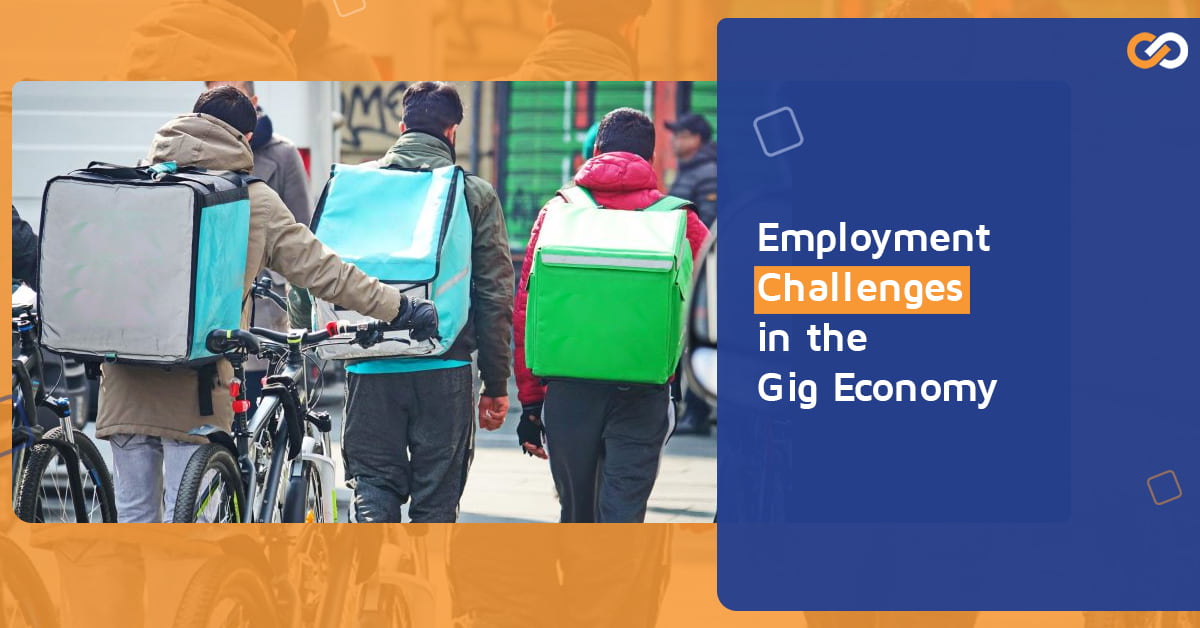
For any job seeker or a college graduate, landing a white-collar job is a dream come true. You go to placement trainings at colleges, white-collar job opportunities have always dominated. But in the recent time things have changed. According to an article by The Economic Times, in 2024, there has been a 92% increase in the hiring of blue-collar gig workers, thanks to e-commerce and delivery services. The rise in blue-collar gig workers shows that job seekers prefer opportunities that give them flexibility and opportunities to learn new skills.
Causes- Rise in Blue-Collar Gig Workers
-
E-Commerce: With the rise in online shopping, especially during the festival season, there has been a rise in the need for delivery agents and warehouse/ inventory managers.
-
Digital Platforms: Platforms like Swiggy, Zepto, Urban Clap etc have given a pool of opportunities for gig workers. An Urban Clap employee can easily earn between Rs 1000-3000 in a day.
-
Attrition in blue-collar: It is hard for a company to retain blue-collar workers. To avoid the hassle of employees dropping out, companies are adopting gig hiring.
-
Accessibility and Flexibility: Blue-collar work doesn’t require formal education, multiple rounds of interviews and a long onboarding process. You can start off quickly. It also appeals to students and migrant workers as it offers them flexible working hours.
-
Change in perception: Once seen as the last career option is now being purposely chosen. People now see the opportunity of having a sustainable income through gig work.
-
Urbanization: Gig work is not only limited to metro cities. As smaller towns and cities are growing, gig work has made its mark there as well. People now don’t have to migrate to metro cities for job opportunities. It gives them an option to stay with their families. Areas which did not have the concept of Swiggy, Zomato before, now have it, thanks to the popularization of gig economy.
Challenges and disadvantages
-
Lack of Benefits
Since gig workers are under a contract they are seen as “independent workers”. This puts them at a disadvantage of not receiving formal benefits that usually full-time workers receive. This includes paid leave and provident fund.
-
Competition
In the gig economy, earnings are not stable because workers are paid for each task and not a monthly salary. Income of gig workers depends on the following factors:
-
Algorithms: This decides who gets the work based on factors like proximity, rating, response time and performance. The algorithm might favor a worker who is closer to the location or someone with a better rating, which will have a direct impact on their earning.
-
Reduction in commission: As part of cost control methods, gig workers face a cut in their commissions as well. For instance, if someone earns Rs 60 for delivering food that covered a distance of 4 kms, for the same distance later, his earning can reduce to Rs 50.
-
High supply, less demand: During non-peak hours if the number of available workers is more and the orders are less, very few people will get a chance to earn an income. Multiple workers wait for the same opportunity.
-
Surge pricing: During peak hours like lunch, dinner and festivals, platforms will pay more as the demand is high. But if the demand is less, the income drops. This creates instability in the pay.
-
Customer: Some days the workers get paid extra because of extra tips, better ratings etc. A bad experience with a customer can impact their income.
-
10-minutes delivery:
An idea like “10-minutues delivery” is a boon for the customer, but a bane for the delivery agents. They feel pressurized to complete the task within the given time otherwise if they don’t, the customer doesn’t have to pay for their order. Hence, it directly impacts the worker’s income. Long hours, peak-time stress, and physical strain are factors of risk.
-
Uncertainty in long-term: Since gig economy doesn’t have a formal structure, there is uncertainty when it comes to job security. If the economy and market undergoes any change, it will impact the gig workers as well.
Strategies for Job Seekers
To take advantage of this opportunity, here’s what job seekers can do:
-
Pick Cities Wisely: Target cities with the strongest growth like Delhi, Ahmedabad, Kolkata. If you’re in smaller cities, explore platforms that operate locally.
-
Be Multi-Platform: Don’t focus on one gig app. Work across multiple platforms to balance slow periods. This helps with income stability.
-
Understand Incentives & Peak Hours: Learn about “peak hours”, which zones pay extra, and align your working days accordingly. This is because platforms reward and give importance to high productivity, bonuses, referral incentives, surge pricing.
-
Keep Costs Under Control: Track all costs and choose efficient routes or times to minimize waste.
-
Upskill for Transition: While engaging in gigs, gig workers learn additional skills that can open doors to supervisory or other roles in future.
-
Network Within the Community: Gig workers can talk to others delivering in their area and also learn best practices, high-paying zones, pitfalls to avoid.
Conclusion
Blue-collar gig work is surely a great way of having a sustainable income without the hassle of multiple rounds of interviews. Companies are also adopting this method as they don’t have to face the problem of attrition. It is a win-win situation for the job seekers as well as the employers.
Here at Job Booster, we have act as a bridge between blue-collar workers and our clients. We have placed blue-collar workers across India. We have also seen that in this competitive market, people are looking for a platform that can help them start off their career with something that will give them stability and flexibility. As blue-collar jobs don’t require a formal education, it has helped us place people with lesser qualifications